Our Black Mesa Adventure: 8.5 Miles, A Million Stars, and Total Isolation
A challenging family hike to Oklahoma's highest point at Black Mesa State Park, featuring incredible stargazing, prairie wildlife, and an unforgettable 8.5-mile trail through the remote panhandle.
Our Black Mesa Adventure: 8.5 Miles, A Million Stars, and Total Isolation
When people think of bucket-list hiking destinations, Oklahoma's panhandle probably doesn't make the list. That's exactly what drew us to Black Mesa—the state's highest point at 4,973 feet, tucked away in the most remote corner of Oklahoma where the state borders Colorado, New Mexico, and Kansas. What we found was an 8.5-mile trail that tested our limits, night skies that left us speechless, and the kind of family adventure that reminds you why you travel in the first place.
Getting There: A Journey Through Rural Oklahoma
The drive to Black Mesa is an adventure in itself. From central Oklahoma, you're looking at a solid five-hour drive through increasingly sparse terrain. As you head into the panhandle, towns become smaller, distances between them grow longer, and eventually you find yourself on roads where you might not see another car for miles.
We stayed in one of the park's bunkhouses—rustic accommodations that were perfect for our needs. The bunkhouse had heat (critical for March nights in the panhandle), basic furnishings, and that cabin camping feel the kids love. Luna immediately started exploring every corner while Kelly and I unloaded our gear.
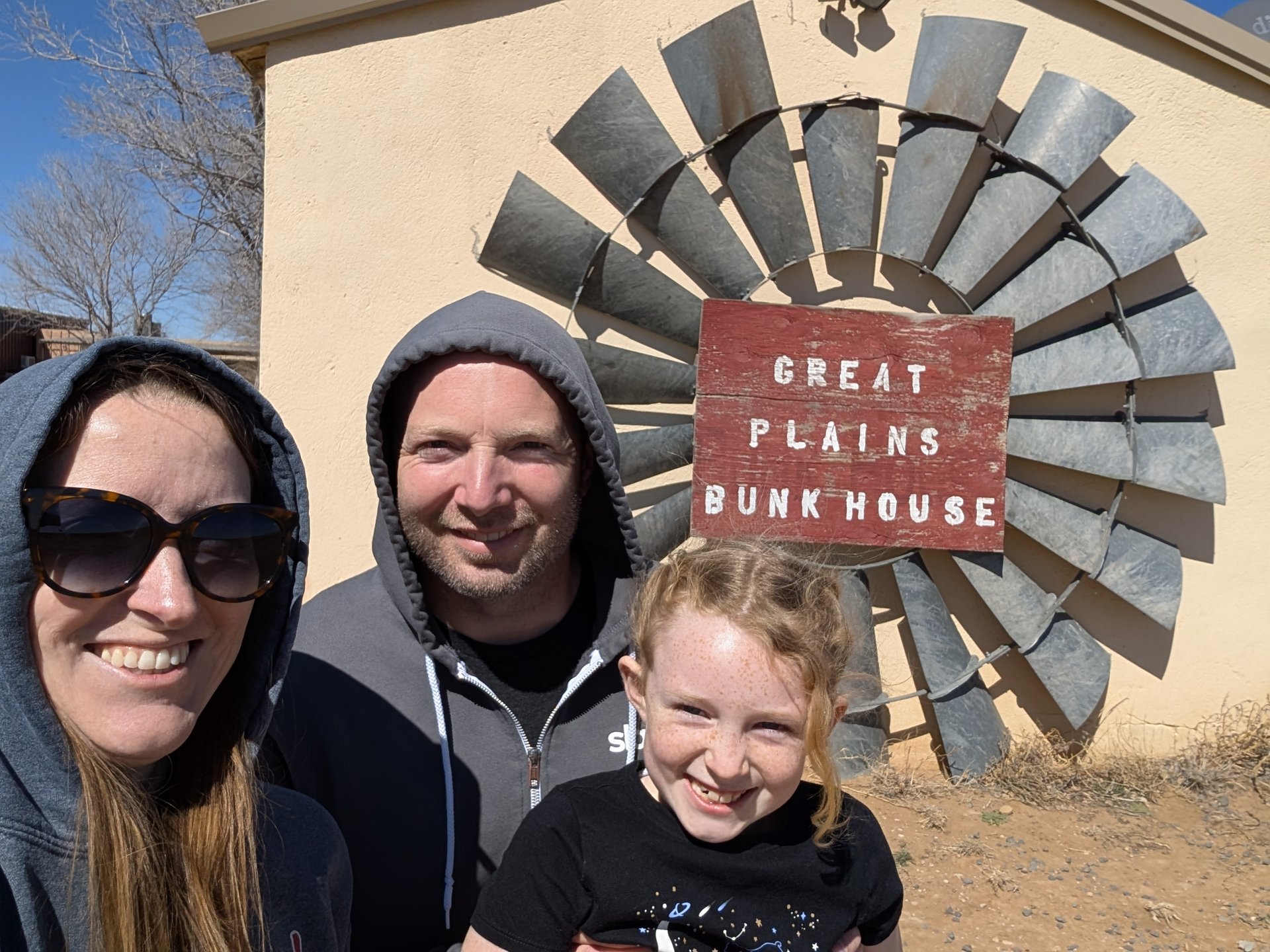
Pro tip: Book the bunkhouses early, especially for spring and fall weekends. There aren't many accommodation options out here, and you don't want to be driving back to civilization after a long hike.
First Evening: Prairie Dogs and Sunsets
After settling in, we headed to the lake area to explore before dinner. The landscape here is striking—flat prairie stretching in every direction, interrupted by rocky outcroppings and the distinctive mesa formations that give this place its name.
The kids immediately spotted the prairie dog town near the lake. We spent probably an hour watching these little guys pop up from their holes, bark warnings to each other, and dive back underground. Emmett was fascinated by their communication system, and Luna kept trying to get close enough for the perfect photo (spoiler: prairie dogs are fast).
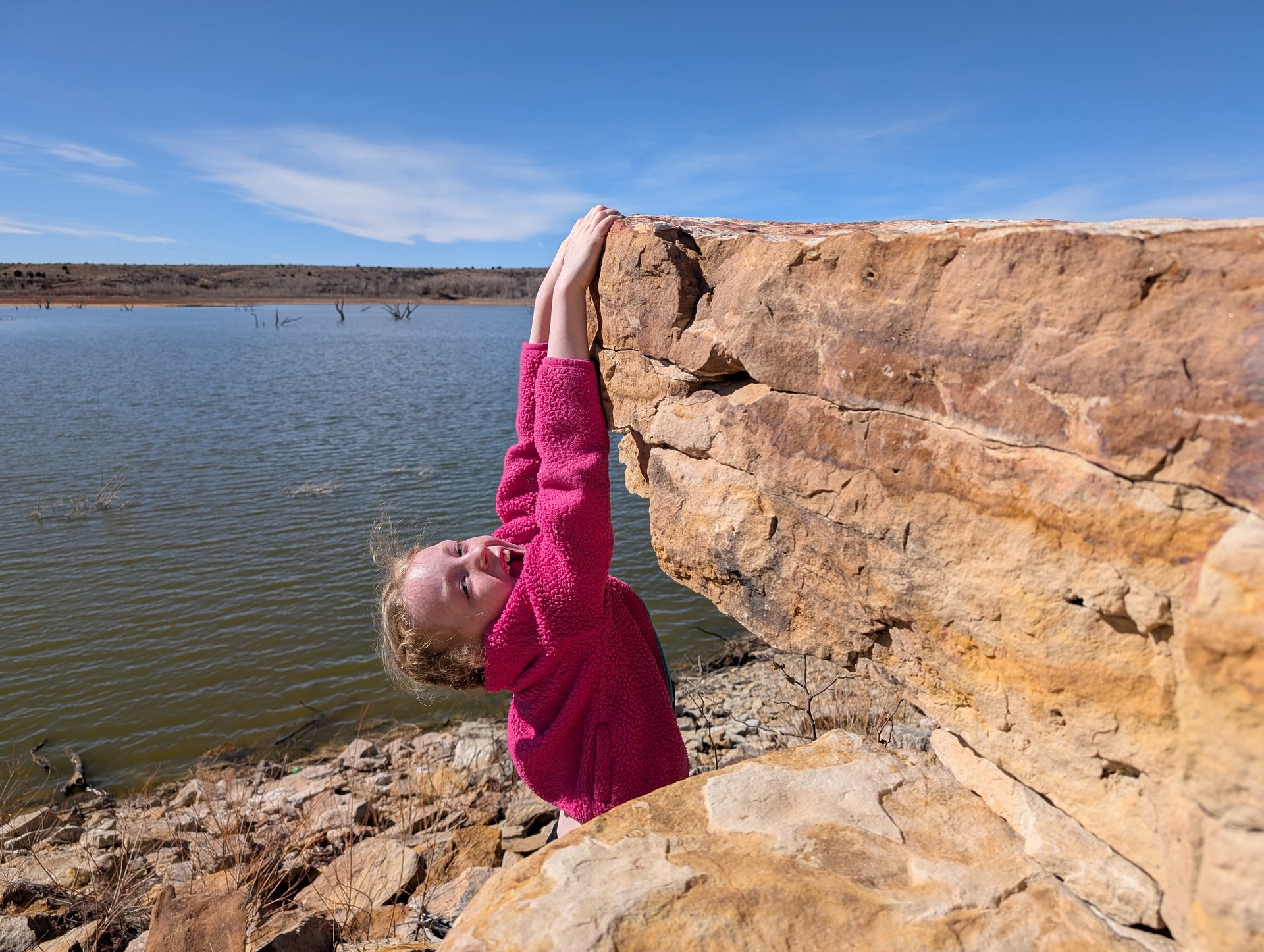
The rocks around the lake area became an impromptu playground. Luna found a boulder perfect for climbing and hanging, testing her grip strength while the sun started its descent toward the horizon.
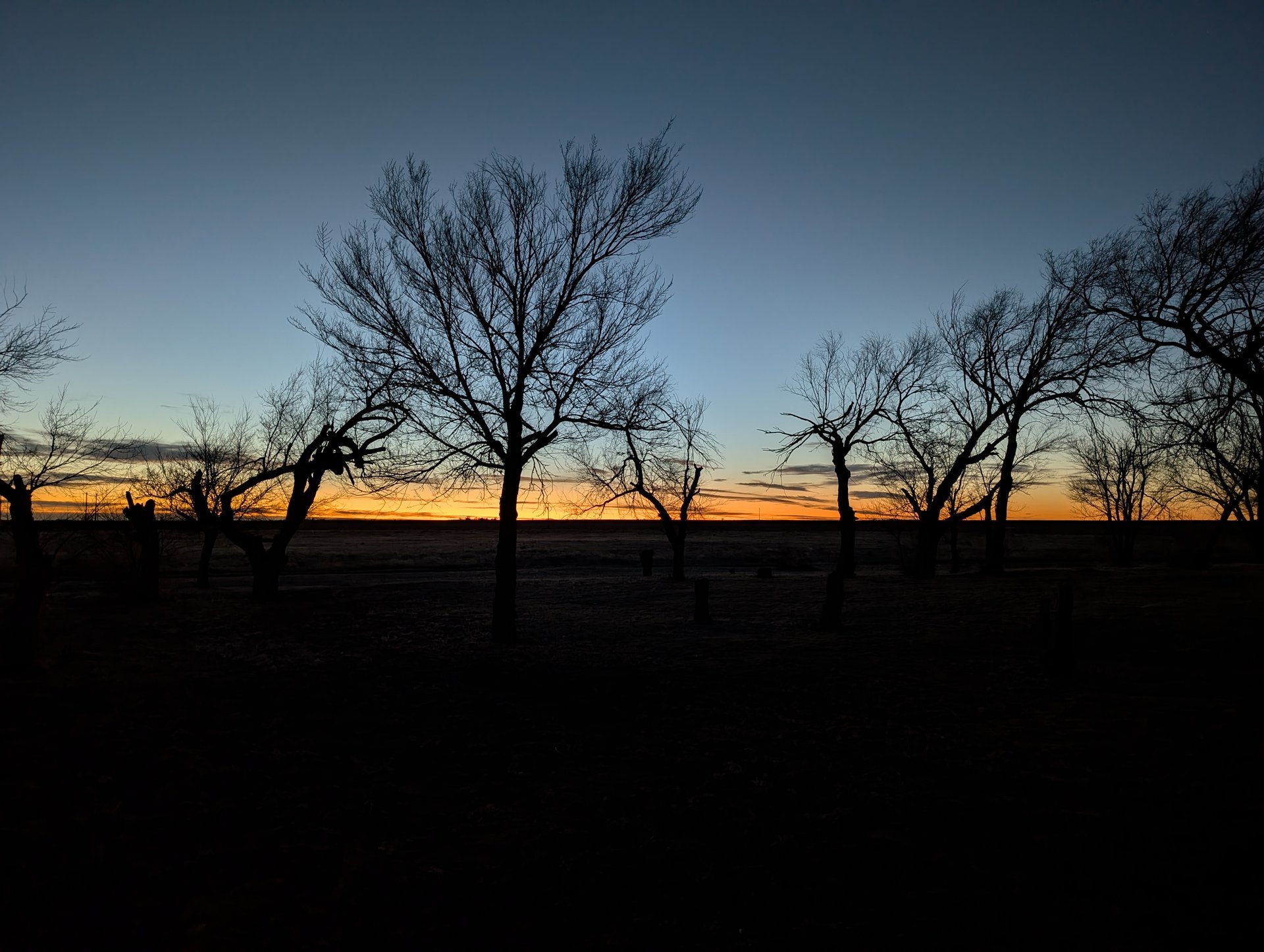
The sunset that evening was spectacular—big sky country showing off with oranges and purples that seemed impossible. But we knew the real show was coming later.
The Night Sky: Worth the Trip Alone
I've seen dark skies before, but Black Mesa operates on a different level. The park is one of the darkest places in the continental United States, and you don't fully appreciate what that means until you're standing there looking up.
We waited until about an hour after sunset, then walked away from the bunkhouse to an open area. When your eyes adjust, it hits you—the Milky Way isn't just visible, it's DOMINANT. A bright band stretching across the entire sky, with more stars visible than you've probably ever seen.
Luna was the first to spot a shooting star, then another. Emmett started counting satellites (we saw at least a dozen). Kelly and I just stood there, necks craned back, occasionally pointing out constellations we recognized. The kids asked questions about the universe that we couldn't fully answer, and somehow that made the moment better.
If you do nothing else at Black Mesa, make time for stargazing. Check the moon phase before you go—a new moon or crescent moon will give you the best experience.
The Hike: 8.5 Miles of Beauty and Struggle
The main event at Black Mesa is the hike to Oklahoma's highest point. At 8.5 miles round trip with about 500 feet of elevation gain, it sounds moderate on paper. The reality is more complicated.
The Start
We hit the trailhead early, wanting to beat the afternoon heat. The trail begins at the end of a gravel road, marked by a simple sign and a registration box. We signed in, double-checked our water supply, and started walking.
The first mile or so is deceptively easy—flat terrain through grassland, well-marked trail, the mesa visible in the distance as your target.
The Trail Conditions
Here's something the AllTrails reviews don't fully prepare you for: this trail is rocky. Not like "watch your step for a few rocks" but "the entire trail is essentially a dry riverbed of loose stones." Your ankles are constantly working, and the uneven terrain saps energy faster than you'd expect.
What We Got Wrong
We made a critical error that nearly derailed our hike: we didn't bring enough water. We had about 2 liters per adult and maybe 1 liter each for the kids. For an 8.5-mile hike in March, that seemed reasonable. It wasn't.
The sun was intense, there's zero shade on most of the trail, and the rocky terrain meant we were working harder than expected. By the halfway point, we were rationing water.
Lesson learned: Bring at least twice the water you think you need. There's no water source on the trail, and the exposure is relentless.
The First Half: Testing Our Patience
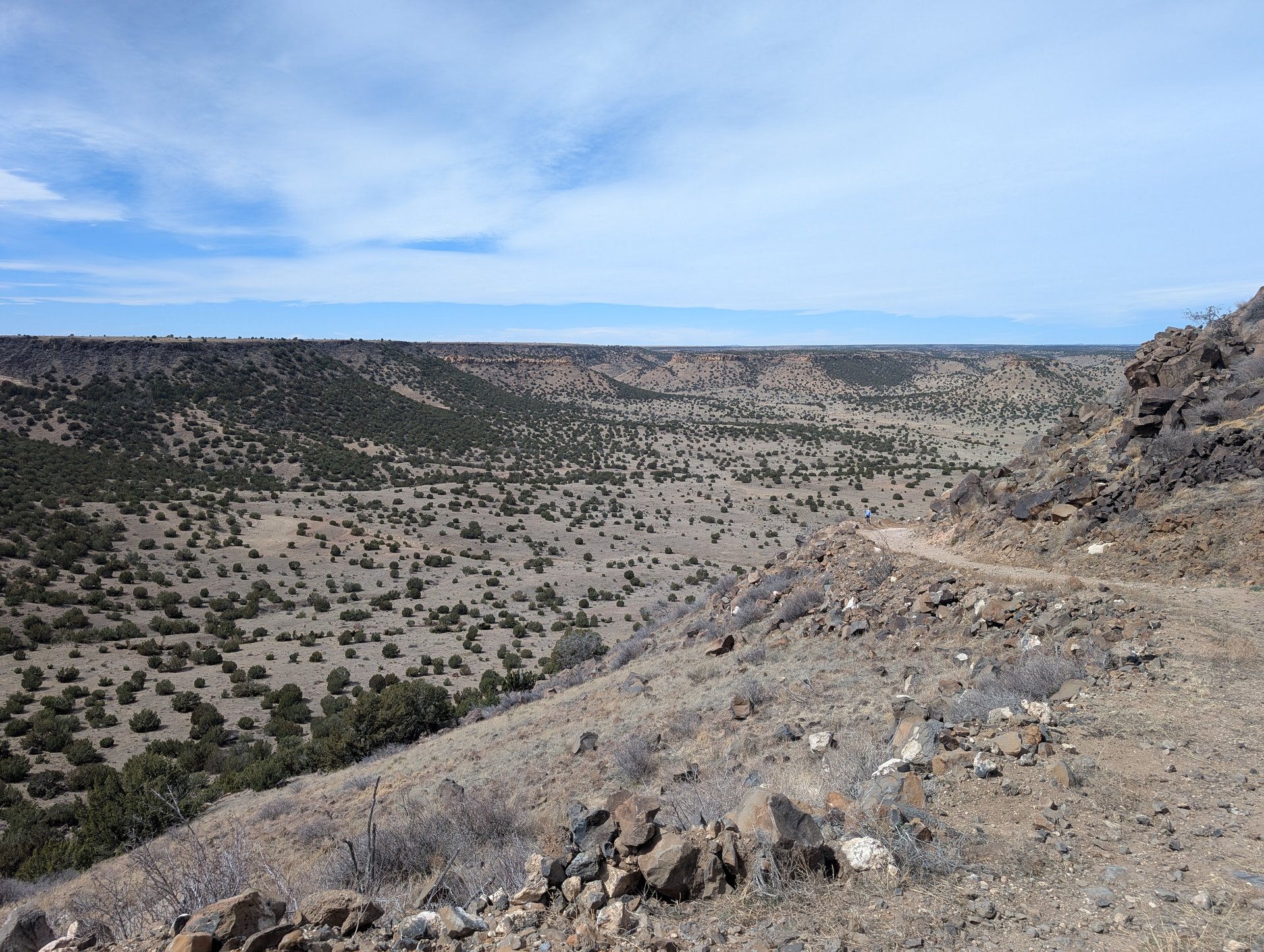
The trail follows a relatively flat path through the high desert landscape for the first several miles. We saw lizards darting between rocks, heard birds we couldn't identify, and watched the mesa gradually grow larger.
Emmett started strong but began dragging around mile two. Luna was more consistent but kept asking how much farther. Kelly and I traded off encouragement duty, pointing out interesting rock formations and playing road trip games adapted for hiking.
The landscape is beautiful in a stark way—juniper trees, yucca plants, and endless views of the mesas and valleys. But the relentless sun and rocky trail were wearing on everyone.
The Ascent: Where Things Got Real
When you finally reach the base of the mesa, the trail changes character. You start climbing through rocky switchbacks, and the views open up dramatically. This is where we got our second wind—or at least the adults did.
The final push to the summit involves some genuine scrambling. Nothing technical, but you're using hands and feet to navigate large boulders. Luna came alive here, treating it like a jungle gym while Emmett needed more coaxing.
The summit has a granite marker denoting Oklahoma's highest point. We made it. All four of us, standing at 4,973 feet, looking out at three states. The kids' exhaustion momentarily forgotten, replaced by genuine pride.
The Descent: Thrilling and Concerning
Going down the rocky summit was actually fun—controlled sliding and hopping between boulders. But then reality set in: we still had over four miles to hike back, our water was nearly gone, and everyone was tired.
Running on Empty
The return trip tested us. Emmett started crying around mile six (total), saying his legs hurt. Luna went quiet, which is never a good sign. Kelly and I split the remaining water between the kids and just kept moving.
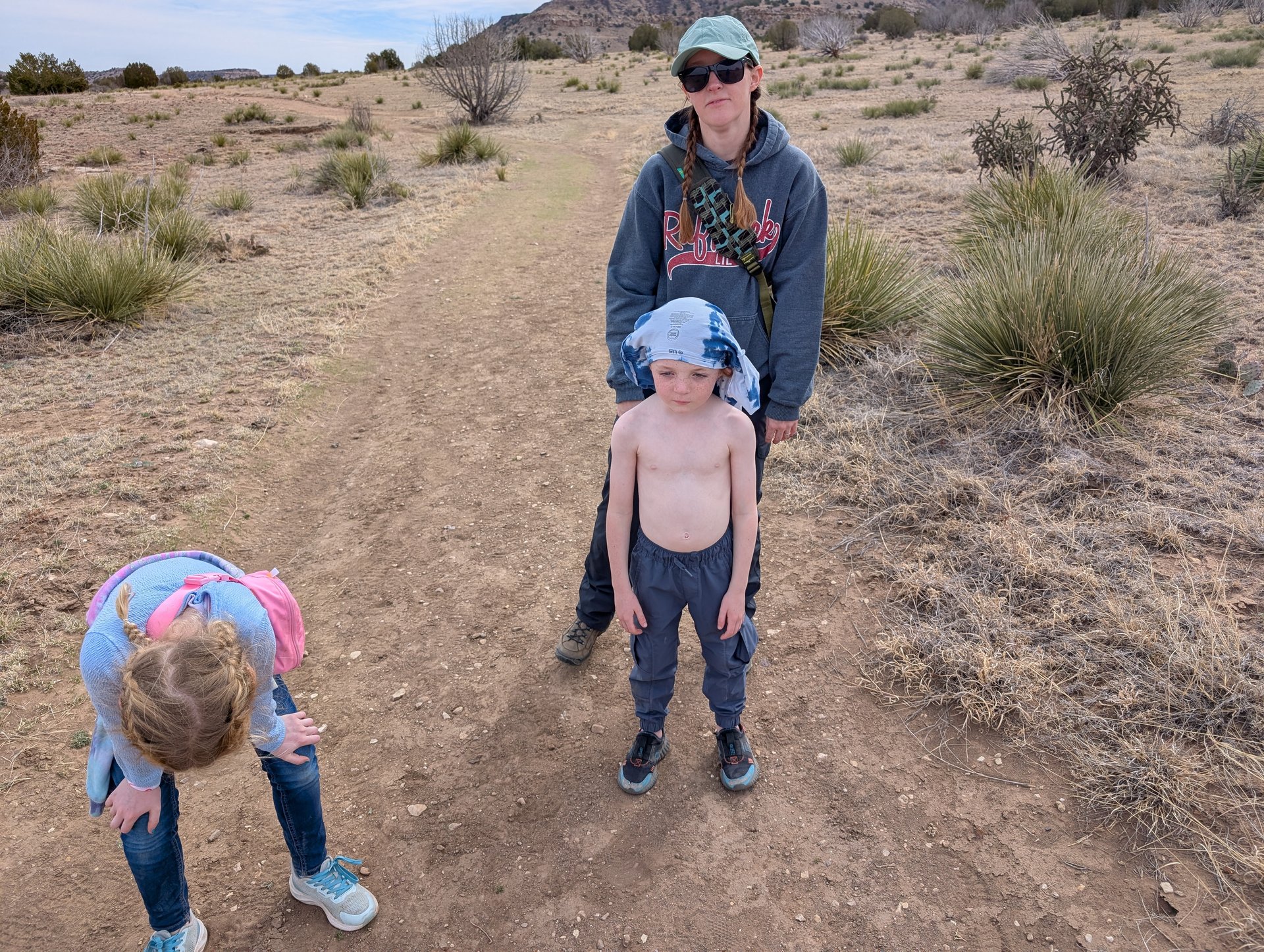
We implemented a rest strategy—walk for ten minutes, rest for two. I carried Emmett piggyback for a few stretches when he hit the wall completely. Luna pushed through with quiet determination that made me proud.
When we finally saw the trailhead in the distance, everyone cheered. We practically collapsed at the car, immediately downing the emergency water bottles we'd left behind. Total time: about six hours including breaks and summit time.
Would I do this hike with kids again? Yes, but with more water, more snacks, and better expectations about the difficulty.
Evening Recovery and Stargazing Round Two
After showers, a big dinner, and some serious couch time, the kids somehow found their second wind. When darkness fell, we ventured out for another stargazing session.
This time we brought blankets and laid on our backs, making the experience more comfortable. The sky was just as incredible as the night before. Luna found Orion's Belt without help. Emmett claimed he could see a galaxy (probably the Andromeda smudge, actually visible from truly dark sites like this).
We talked about the hike, already reframing the difficult parts as adventure. "Remember when Emmett's legs were so tired?" became a funny story rather than a crisis. That's the magic of challenging experiences with family—struggle becomes bonding becomes memory.
The Wildfire: An Unexpected Finale
Our last morning brought an unexpected sight: smoke on the horizon. A wildfire had started somewhere in the distance, and we could see the plume rising against the blue sky. Park rangers assured us we weren't in danger, but it was a stark reminder of how dry and remote this landscape is.
We watched the smoke for a while from a safe distance, talking with the kids about wildfires and ecosystems. It added an unexpected dimension to our trip—nature isn't just beautiful vistas and fun hikes; it's also powerful and unpredictable.
Practical Information
Accommodation:
- Black Mesa State Park has bunkhouses and campsites
- Bunkhouses have heat/AC, bunks, and basic amenities
- Book ahead for spring and fall weekends
- Nearest hotels are in Boise City, about 30 miles away
The Hike:
- 8.5 miles round trip to the summit
- Allow 5-7 hours depending on pace and fitness
- Bring MORE water than you think (recommend 1 gallon per person minimum)
- No shade on trail—sun protection is critical
- Trail is rocky throughout; sturdy hiking boots recommended
- Register at the trailhead
Lake Area:
- Great for wildlife watching, especially prairie dogs
- Nice rocks for climbing and exploring
- Small lake, primarily used for fishing
- Perfect for evening sunsets
Stargazing:
- One of the darkest sky areas in the continental US
- Best viewing an hour or more after sunset
- Check moon phase—new moon is ideal
- Bring blankets for comfortable viewing
- No special equipment needed; naked eye viewing is incredible
Dining:
- Extremely limited options in the immediate area
- Boise City has a few restaurants and a grocery store
- We recommend packing coolers with food
- Bunkhouses have basic kitchen facilities
Best Time to Visit:
- Spring (March-May) and fall (September-October) are ideal
- Summers can be extremely hot
- Winter brings cold temperatures and possible snow
- March gave us warm days and cool nights—perfect for hiking and stargazing
Final Thoughts
Black Mesa isn't a glamorous destination. There are no fancy restaurants, no Instagram-famous viewpoints, no tourist infrastructure. What it offers is something rarer: genuine remoteness, challenging adventure, and night skies that remind you how small we are in the universe.
The hike pushed our family to our limits. There were tears, there was rationed water, there were moments when I wondered if we'd bitten off more than we could chew. But standing at Oklahoma's highest point with my wife and kids, knowing we'd earned that view with every rocky step—that's the good stuff.
Luna still talks about the stars. Emmett is weirdly proud of how tired his legs got. Kelly and I are already planning our next adventure to a place most people overlook.
Sometimes the best trips are the ones where nothing goes quite as planned, where you discover what your family is capable of, and where the destination forces you to be present because there's literally nothing else around.
Have you hiked Black Mesa or visited another dark sky destination? We'd love to hear about your experience—share your story in the comments below!